Sunday, December 31, 2017

Mission Accomplished

At the beginning of 2017, I made a New Year's resolution to publish a review of every book I read this year. And here I am, just sneaking under the wire.

It's been a year of series. I've read a bunch of Jack Reacher books, and Lee Child's prose for action is gripping. (I discovered it's all about dropping the pronouns. Cutting them. Speeding things up. Leaving you breathless, especially when you've been ELBOWED IN THE FACE.) 

I'm also neck deep in the Stephen Erikson's Malazan Book of the Fallen, a ten book series, which is probably the most overwhelming mountain of reading I've ever climbed. (Honourable mention to Don Delillo's Underworld, but by simple page count there's no real competition.) It's epic like nothing I've ever read, and it's been inspiring in my own world building for the nerds with whom I play Dungeons & Dragons.

Despite all these series, I'm going to call my favourite fiction of the year Everybody's Fool, by Richard Russo, and my favourite non-fiction Rubicon, by Tom Holland.

This year also marked the release of my first book, called Morgan the Brave. It's a book for young readers just starting on chapter books, and it's about a kid - Morgan, who is not particularly Brave - invited to a birthday party... featuring a screening of Brain Eater, the scariest movie ever made. 

Looking forward: my bookshelf is chock full of fantastic books I can't wait to read. I'll keep reviewing, but I'd also like to branch out in my book-related goings-on. 2018's goal is to start a sci-fi book club. There, I said it. Now it's as official as anything else on the internet. 

Happy New Year!


Review: Everybody's Fool

Everybody's Fool Everybody's Fool by Richard Russo
My rating: 5 of 5 stars

Richard Russo finds the humour and heart of each of his characters no matter what circumstances they face. It's small town people who are on a familiar basis with their own personal ruts, who know their foibles like they know their friends.

And while the humour and heart of a small town may not scream Plot!, things really rip along. There are thrills, chills, action, and mystery! Russo keeps his characters busy.

What most endears Russo's writing to me is the kindness of his narrative. This is not Evelyn Waugh, in which every conceit or dream eventually reverts to the natural state of misery. Instead, these characters strive to find happiness and peace through accepting themselves, whatever their outward circumstances might be. Russo lets them achieve this self-love, too, which gives the whole book a feeling of generosity. Just because he plays God, as author, doesn't mean he must be cruel. It's not maudlin; it just feels true.

Definitely one of my favourites of 2017.

View all my reviews

Review: Reaper's Gale

Reaper's Gale Reaper's Gale by Steven Erikson
My rating: 4 of 5 stars

The risk of writing a ten book epic fantasy series is that each volume will inevitably be weighed against the merits of the others. It's not fair to expect Erikson to keep topping himself, and he doesn't. That's not to say this book isn't superb. There are memorable battles, emotional deaths and salvations, and deeply satisfying comeuppances, that in any other series could easily stand out as climaxes. Yet there are a number of plot threads that Erikson introduces only to hold back, teasing us with their consequences.

But those teases are okay, because there is still so much happening that we don't notice any lack. So many things could occur that when only half of them actually come to pass, it's nonetheless an almost overwhelming amount of plot.

As I get farther in the series, I think I'm beginning to get a handle on the big picture of what's going on. But it's also entirely possible I'm lost. There's no way I'm giving up now though - and if there's a way to keep readers going in a series, perhaps it's investing them through thousands and thousands of pages.

It's now been over a year of reading Malazan, and I can look back across the history of what I've read. The stories characters swap around the tavern tables in these books are the legends of what I've already read. It's an extremely rewarding immersion.

View all my reviews

Review: The Secret Adversary

The Secret Adversary The Secret Adversary by Agatha Christie
My rating: 4 of 5 stars

Raymond Chandler's The Big Sleep was so complicated that he himself couldn't figure out who killed the chauffeur. Yet it remains a classic on the strength of the characters.

On the other hand, some modern detective fiction these days seems to have success based not on complicated or unique characters, but on gripping plots and a sense that the reader could unpick the mystery themselves.

In The Secret Adversary, Agatha Christie's second book, she holds a clever balance between plot and character. When the plot gets thin - as it does in places, trying to explain secret Russian scheme to topple the government and incite a popular revolution by various means - the characters charm the reader along with British wit and brassiness. When the characters get thin, there's a daring scheme or a sudden turn of fortune that throws them into fresh peril.

One of the book's strongest suits, and which helps to gloss over any plot or character shortcomings, is the humour. I'm a sucker for dry British wit, and both the prose and the dialogue have a levity that kept the wind in my sails straight through to the end. It's a quick, light read, and one of the funniest books I've read in a long while.

View all my reviews

Thursday, December 21, 2017

Review: A Handful of Dust

A Handful of Dust A Handful of Dust by Evelyn Waugh
My rating: 2 of 5 stars

When faced with the ultimate meaninglessness of life, human foibles all add up to despair, death, or a happy combination of the two! - or so Evelyn Waugh would have you believe. I didn't know anything about the author or his reputation before picking it up, but from the first few chapters I imagined it going in a P.G. Wodehouse direction: each chapter had another miscommunication, and the Gordian knot of social faux pas was grower larger and larger. I couldn't wait for Jeeves to come along with his nail scissors, snip a single thread, and everything would shake out for the better in the end. How innocent I was.
I now understand that Waugh is just the opposite of Wodehouse. There is no reconciliation, laughter, or even understanding; instead there is alienation, misery, and abandonment by an unforgiving universe. Every character is chasing their own personal gain, only to find that happiness and fulfillment is a bitter illusion. And it's no morality play, because the only character fool enough to actually care about other people is punished most of all.
Waugh's nihilism makes this reader despair. Life is short - why read Waugh?

View all my reviews

Thursday, November 16, 2017

Review: The Turn of the Screw

The Turn of the Screw The Turn of the Screw by Henry James
My rating: 4 of 5 stars

The success of airport fiction (Lee Child, P.D. James, etc) speaks to the appetite for books that read like movies. I've certainly read more than my fair share of them, and I won't pretend I don't love them.

But great writing can be more than a succession of scenes and dialogue, as is the case in The Turn of the Screw. Henry James tells the story through feeling, thought, intuition, intangible hints of fear and danger that bring out the extraordinary from the ordinary. (Trying to pick up a Linwood Barclay after finishing TOTS, the narrative seemed impossibly thin.)

At times the prose can become, to the occasional bamboozlement of the modern reader, convoluted with clauses and niceties of speech, but that is of the era. In such a short book, it really doesn't hurt to have to slow down. The story itself is simple, and its those clauses and elaborations that lend it weight.

When it comes to spookiness, it was exactly as tame as I suspected it would be. I've read and watched too much modern horror of various genres for this haunting to really get me. But James whips the emotional turmoil into a frenzy for the climactic scene with brilliant artistry, and his literary muscles really flex.

Unrelated: why do so many classics feel the need to bookend their tales with a meta-narrative of old Brits sitting around at the club swapping yarns? But damn, they told good stories, didn't they?

View all my reviews

Monday, November 6, 2017

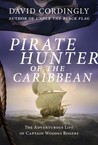
Review: Pirate Hunter of the Caribbean: The Adventurous Life of Captain Woodes Rogers

Pirate Hunter of the Caribbean: The Adventurous Life of Captain Woodes Rogers Pirate Hunter of the Caribbean: The Adventurous Life of Captain Woodes Rogers by David Cordingly
My rating: 4 of 5 stars

I've read almost nothing about the so-called "Golden Age" of piracy, and this book gave a fascinating and well-documented overview of the era. Ostensibly a biography of Woodes Rogers, a rather tragic figure tasked, in 1717, with defending and building the British colony in the pirate hotbed of the Bahamas, it casts a much wider net.
Cordingly writes like a researcher, and the book is heavy on facts, figures and dates. While it means the pacing bogs down in places, that same attention to detail can bring to vivid life individual sea battles, town raids, and arguments. Where documentation exists, Cordingly has found it.
The world was a bigger place in the 1700s, and despite the fact that the Spanish, English and French are colonizing like crazy, these are the stories of men (and occasionally women) who decide to throw off the yoke of government and society and seize control of their own fate. That being said, most of them are pretty awful people, inured to hardship and violence from their miserable sailor lives, but they're easy figures to romanticize. There are not many happy endings to pirating careers, but they are vigorously alive while they last.
Cordingly relies heavily on Captain Charles Johnson's "A General History of the Pyrates", first published in 1724, when these pirates were in the headlines. (Johnson is generally assumed to be a pen name for Daniel Defoe.) I was thrilled to discover that very book on my wife's bookshelf, so I'm looking that direction next.
On a purely linguistic note, I love how alive the English language feels in Cordingly's primary sources. The wild variations of spelling and punctuation from that time remind me that our so-called rules are nothing more than the societal consensus of an era that is already disappearing. I used to bemoan what I perceived as the degradation of the written word in the age of the internet. But language will evolve whether I endorse it or not, and as long as meaning is communicated, I think I can feel at piece.

View all my reviews